Vacuum cords twist because of 'cord memory' from improper winding. Learn the hot water trick to relax the insulation and the Figure-8 technique to prevent future knots.
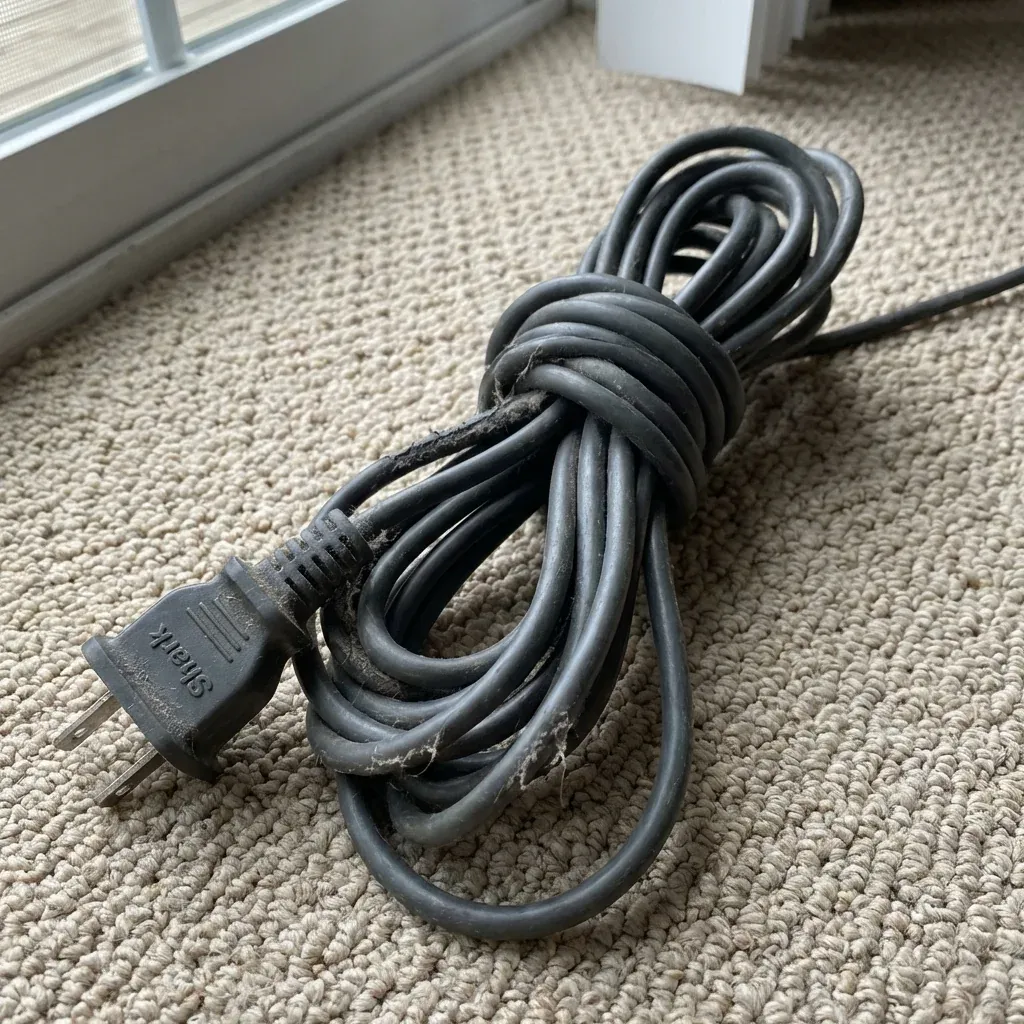
If you feel like you’re fighting a wrestling match with your Shark Navigator’s power cord every time you vacuum, you’re not alone. Over time, power cords develop “muscle memory”—but not the good kind. They want to twist back into the tight, kinked shape they’ve been forced into for years.
Vacuum cords twist because of ‘cord memory’ from improper winding. Learn the hot water trick to relax the insulation and the Figure-8 technique to prevent future knots.
- Symptoms: cord twisted, cord won’t wind, knots in cord
- Tools: warm water, cloth, gloves
- Difficulty: Easy
This isn’t just annoying; it’s dangerous. Severe twisting can eventually break the internal copper wiring, leading to shorts or fire hazards.
Here is how to release that tension and get your cord straight again.
Why Does This Happen?
It’s almost always caused by improper winding. If you wrap the cord tightly around your elbow and hand (like a contractor might with an extension cord) before putting it on the vacuum, you are introducing a 360-degree twist with every single loop.
How to Replace a Shark Navigator Power Cord: A DIY Safety Guide
Do that 50 times, and you have 50 twists waiting to spring loose.
The Fix: The “Hot Cloth” Technique
To reset the cord’s memory, we need to gently heat the insulation to make it pliable, straighten it, and let it cool in a straight line.
What You Need:
- A bucket of hot tap water (not boiling, just hot)
- A washcloth
- Heavy duty gloves (optional, to protect hands from heat)
Step-by-Step:
- Unwind Fully: Take the entire cord off the vacuum and lay it out on the floor.
- Anchor One End: Plug the vacuum in (but don’t turn it on) or have someone hold the plug end.
- The Heating Pass: Soak your washcloth in the hot water and wring it out so it’s damp, not dripping.
- Pull and Glide: Wrap the hot cloth around the cord near the plug. Firmly pull the cord through the cloth, walking backwards away from the anchor point. You are “ironing” the cord with the heat of the cloth.
- Repeat: Do this 2-3 times. The heat relaxes the plastic rubber insulation.
- Let it Cool: Leave the cord stretched out straight on the floor for 10-15 minutes until it is completely cool.
How to Prevent It (The Figure-8)
Crucially, you must change how you wind the cord, or the knots will return in a week.
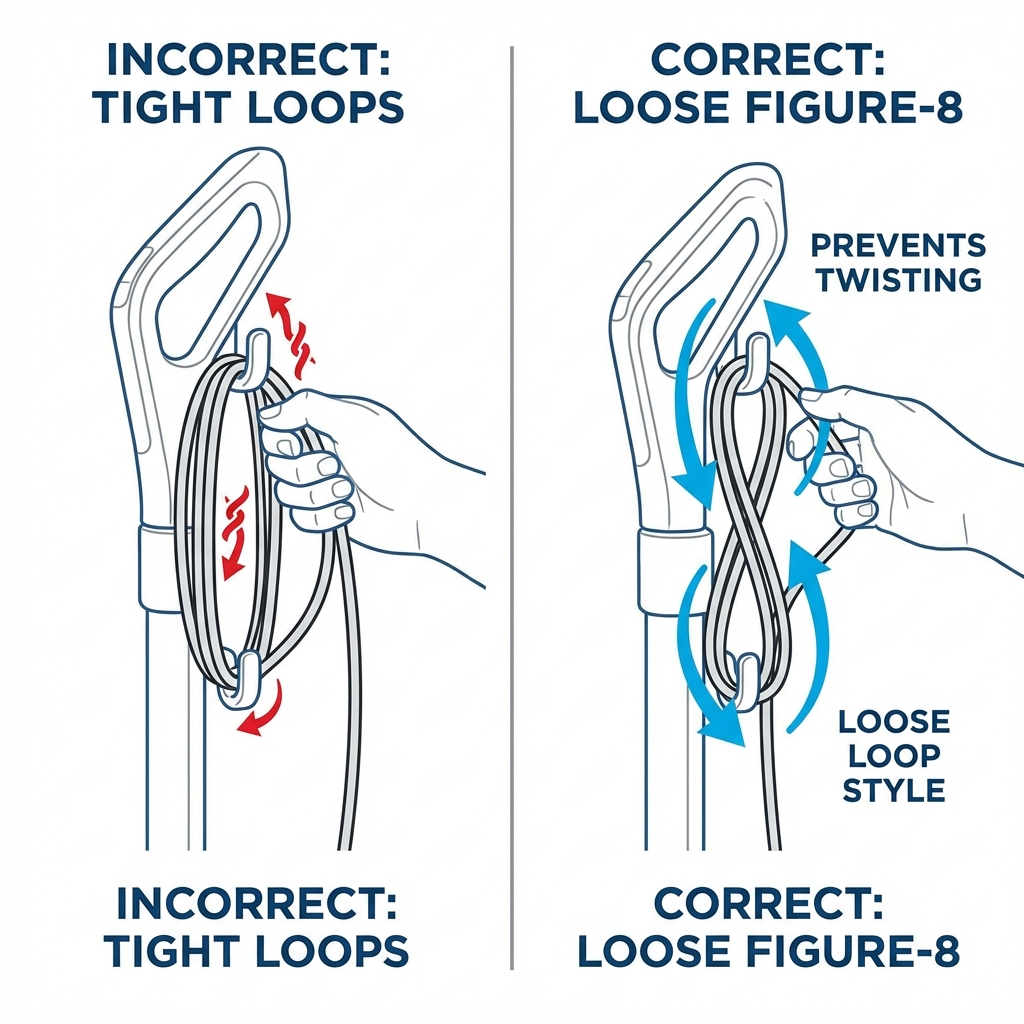 Figure 1: Avoid tight loops. Use loose loops or a Figure-8 pattern.
The Golden Rule: Never wind the cord tightly around the hooks. Leave a little slack at the plug end before you start winding. This prevents the internal wires from pulling out of the plug head.