Bagless vacuums are convenient, but emptying them can trigger allergies. Learn the 'Wet Paper' trick and other methods to keep the dust out of your lungs.
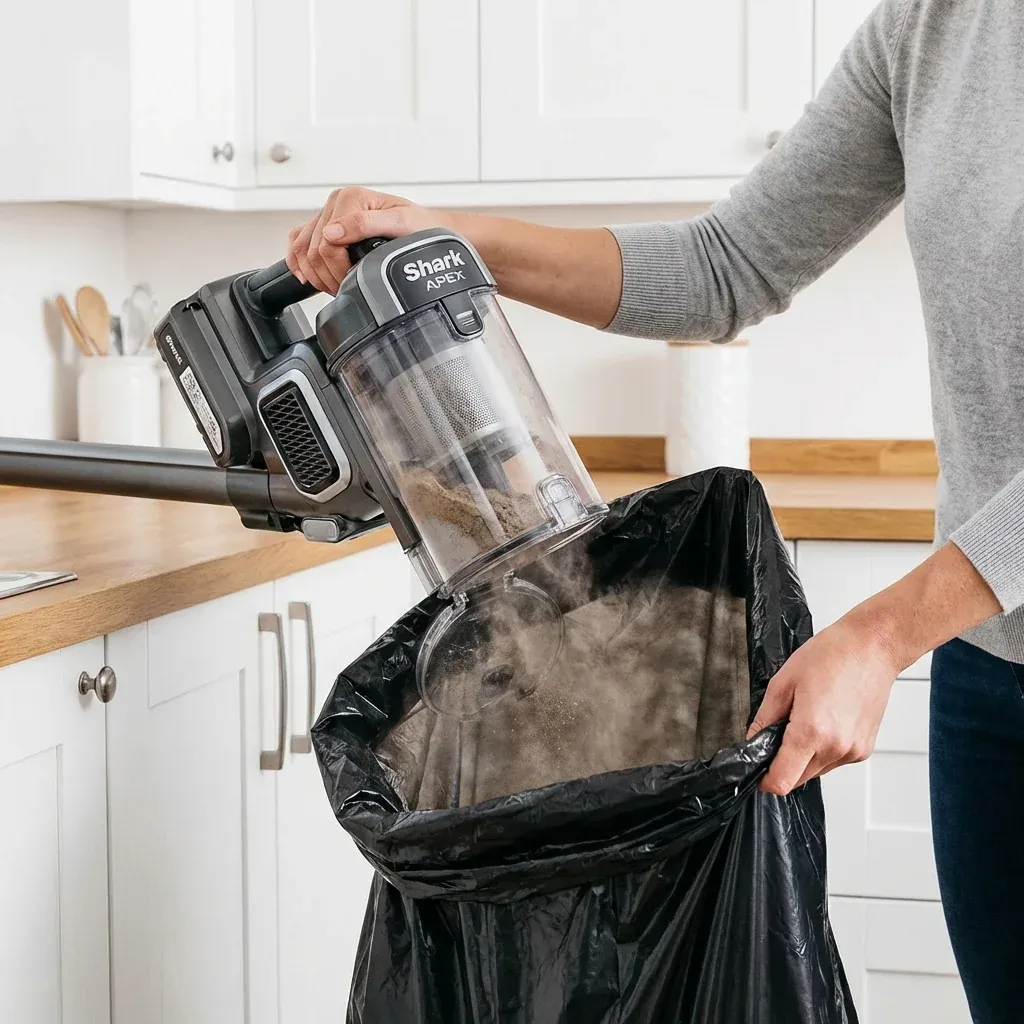
The biggest drawback of a bagless vacuum is the “dust explosion” that happens when you press the release button. For seniors with respiratory issues or allergies, this tiny cloud of fine dust can cause coughing fits or sneezing for hours.
Bagless vacuums are convenient, but emptying them can trigger allergies. Learn the ‘Wet Paper’ trick and other methods to keep the dust out of your lungs.
- Symptoms: sneezing after vacuuming, dust settling on furniture, allergic reactions
- Tools: Trash Bag, Water Spray Bottle
- Difficulty: Easy
Here are three ways to empty your Shark or Dyson without the mess.
Method 1: The “Deep Bag” Technique (Most Effective)
- Take a tall kitchen trash bag.
- Place the entire vacuum dust cup inside the bag, reaching as far down as possible.
- Gather the opening of the bag tightly around your arm.
- Press the release button and shake the cup while it is fully submerged in the bag.
- Wait 10 seconds before pulling your arm out to let the fine particulate settle.
Shark vs. Roomba: Which Robot is Easiest for Seniors?
Method 2: The “Mist” Trick
If you have a spray bottle with water, give the inside of your trash can a light misting before you empty the vacuum.
- How it works: Moisture in the air catches the dry dust particles and weighs them down, causing them to fall straight to the bottom instead of floating upward.
Method 3: Outsource the Air
Empty your vacuum outside or in the garage.
- If you empty your vacuum in the kitchen, the HVAC system will often suck up the fine dust cloud and redistribute it throughout your entire house.
- By doing it outdoors, You ensure that the 0.3-micron particles (the ones that cause allergies) stay out of your living space.
Maintenance for Allergic Users
If you are highly sensitive to dust:
- Wash your dust cup: Once a month, wash the plastic bin with warm soapy water to remove the “static” film of dust that clings to the sides.
- Check the Gaskets: If you see dust leaking from the seams of your vacuum while cleaning, the rubber seals are worn out. (Check our Seal Replacement Guide).